Monday, July 23, 2012

Wisdom Learned from Peace Corps Unemployment


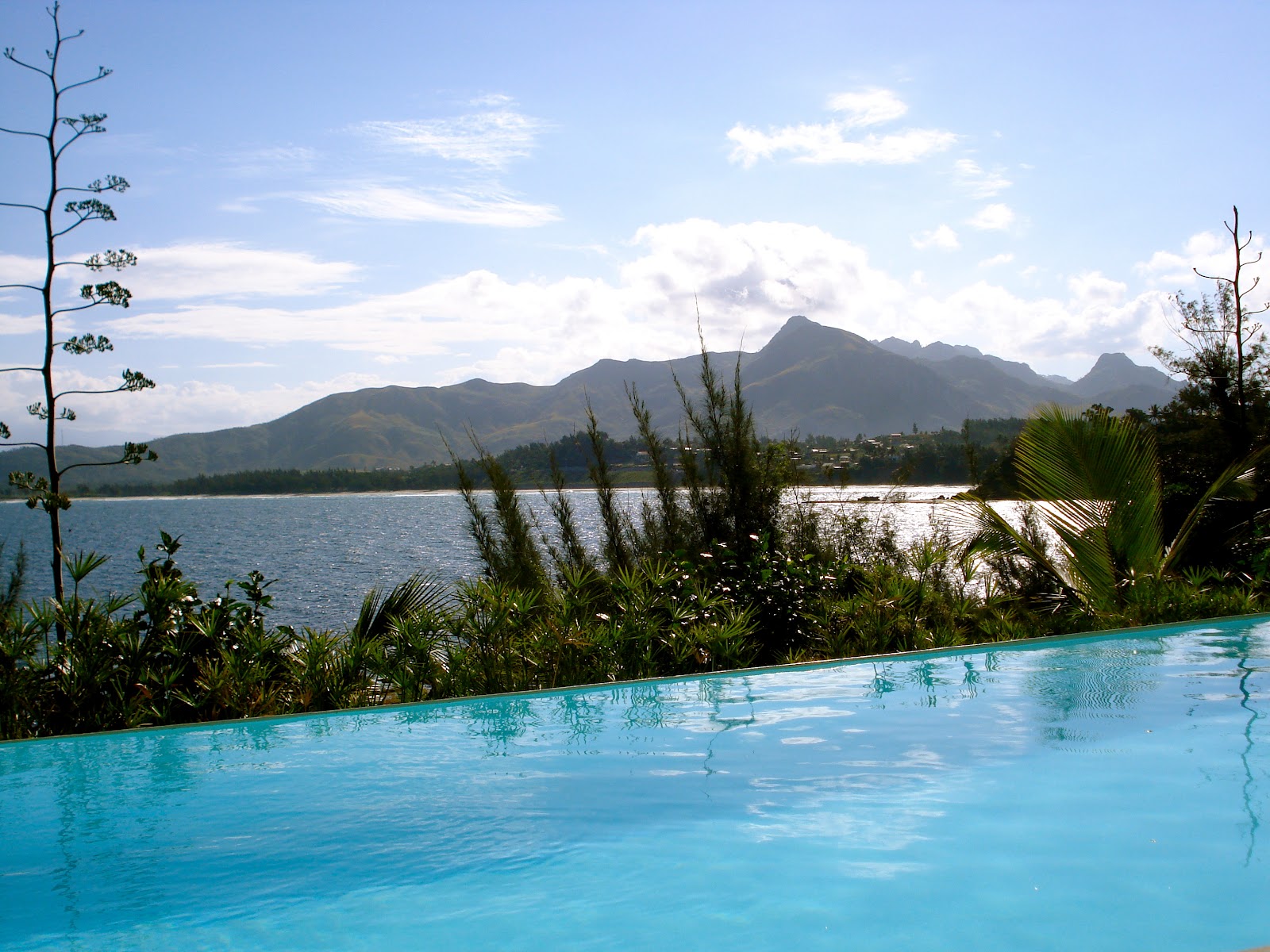
In my last blog, I wrote about the countrywide teacher’s strike going on in Madagascar that was messing with my master plan that I meticulously laid out starting this past February. Then all the health centers and hospitals went on strike as well. Cool. I asked for good vibes for the strikes to end and I am happy to report that after 2 months, I am going back to work this week! I’m sure everyone is dying to know what I’ve been up to for the past interim months. Basically just a lot of adventuring, fun, and learning. I dislocated my elbow falling off a camion, celebrated Madagascar’s Independence Day and watched a house get set on fire during the fireworks show, got my purse stolen with everything I owned in it, but then had it miraculously returned. I camped out on the beach, swam in an infinity pool that overlooks the Indian Ocean, and even stayed up all night once! These past two months in Madagascar have been among some of my hardest because I really had to look at my reasons and motivations for being here, minus work and projects and all the other Western things that have kept me busy in the past. But Madagascar is always teaching me new things and making me grow and reevaluate. I have some interesting things going on in the next few months now that the strikes are over, starting with being a translator for Operation Smile this upcoming August. I’ll write more about that experience as it happens. But here are some pictures to illustrate what I can’t put into words about my last couple months here. 


Wednesday, May 16, 2012

How Peace Corps Made Me Proud to be an American and Madagascar Surprises Me Once Again

My post-World Malaria Day life has continued on at a slower pace. A crippling countrywide teacher’s strike has shut down the entire education system here, and subsequently squashed my hopes to get my Peer Educator project (PHELT!!) off the ground any time soon. But after almost a year here, I’m no longer concerned with these Western notions of “time-frames” and “schedules.” So it is what it is. I’m working a few days a week at the health center, and spending a lot of time riding my bike around visiting the new Peace Corps volunteer and my old friends at Azafady. Also as anyone familiar with my Machu Picchu Peruvian trek would know, I can use all the extra bicycle-practice I can get. Jekka, I am happy to report that so far I have NOT crashed over any cliffs! Although I have found it very challenging to bike through sand, it’s literally not possible. And it’s very frustrating. But enough about that. 


Madagascar’s Quest to Always Defy My Expectations

Living every day in a Third World country really makes you thankful for what you have at home. I guess after so long here, I’ve developed certain desensitization to things, but I was really struck when I brought a group of 8 or so Azafady volunteers to see the health center. The health center of Commune Rurale Mahatalaky is very basic. It is made up of five cement rooms: an office where the nurse sees all sick patients, a maternity room/sick ward, a dispensary, a delivery room, and another office where the nurse does prenatal visits and family planning appointments. The maternity room/sick ward is made up of four metal beds. The dispensary has one fuel-powered refrigerator where we keep the vaccines on ice blocks. The delivery room has one bed with stirrups and a water bucket. The two offices have a desk and a few chairs. It’s very simple. I think it’s pretty nice! But taking these visitors there for whom this hasn’t become the norm was an eye re-opening experience. They were shocked at the lack of amenities.

“So what if something goes wrong during labor?” someone asked.

“Umm…then they get on the truck to go into Fort Dauphin, if they have enough money.” I replied.

The other day as the nurse and I were doing the standard 50 prenatal visits, a very extremely pregnant woman walked into the delivery room with her mom and grandma, her birthing team.

“She’s in labor!” exclaimed the mother.

My wonderful, hard-working, ever-patient nurse sighed and paused the prenatal visits and walked over to the delivery room to check on this mother-to-be.

“She’s not nearly dilated enough. Come back tomorrow” the nurse kindly informed the woman.

“But she’s in pain! She needs to push now!” the over-eager grandma-to-be said forcefully.

Throughout this whole exchange, the nurse had kept her cool, but after that comment, her cool slipped a little, and the animated and confident and adamant nurse I’ve come to know and love emerged:

            “Labor MUST hurt! It is painful work! COME BACK TOMORROW!”

I stifled a laugh, and the expectant mother and her team meekly headed out the door.
This is just a day in the life at the rural health center. One hard-working and committed nurse with her vazaha sidekick (me!) doing the work that an entire department would do at a Western hospital, with about 1/18th of the amenities available at one. When I stop to look around at what I’m doing and where I’m working, it really is a learning experience. Waiting 6 hours for a prenatal visit in the rain? Women here do that every single month. Walking 10km in the early stages of labor just to give birth in the hospital? Normal. How lucky are we to live in a place where it is culturally acceptable for a woman to scream obscenities at her husband during labor? How lucky are we to live in a place where people are impressed at a mother who chooses not to get an epidural? How lucky are we to never have to worry about malaria? And these are just off the top of my head. Madagascar never ceases to amaze me.

America the Beautiful

I spend a lot of time hanging out with Europeans. The Peace Corps community in Southern Madagascar is small, but luckily enough for my sanity and social life, Azafady is around to keep me company. Among fellow Peace Corps volunteers, being a Californian is reason enough for ridicule. (You all just WISH you were from the Golden State!) But among my Euro friends, hailing from the Land of the Free is all the ammunition needed to make an average joke an excellent one. I don’t get it, obviously. I mean they’re all just jealous right? So I’ve come to the conclusion that America is the place everyone else loves to hate, but secretly wishes they could be from. Take that, haters! Where else can I get away using vocabulary like “holla” and “bummer” and “haters” and spelling things with a “z.” Additionally, living outside of the US makes you appreciate all the mundane inside the US. Boy, do I appreciate a sandwich now! And all those other little things you never realize you’ll miss until you do. For example, cuddling up under the covers on a cold morning, eating popcorn in a movie theater, and running down to Walgreens to pick up some Scotch tape. But seriously, there really is something so sweet about the companionship of a fellow American when you’re far away from home. They just GET me. I would also like to say that Arnold Schwarzenegger, the disgraced former governor of California, is one of the few Americans that are also famous in Madagascar. This list consists of fellow superstars Jackie Chan, Chuck Norris, and the one and only Barack Obama. You’re welcome World!

            I recently found myself sharing a Mexican dinner with a few of my awesome British friends on Cinco de Mayo. As we happily ate our bean burritos I commented on how glad I was to be doing something on Cinco de Mayo.

            “What’s Cinco de Mayo?” asked one ill-informed British person.

            “You know, Cinco de Mayo! Fifth of May! Mexican Independence Day? Cinco de            Drinko? NOTHING??”

I was flabbergasted. What kind of country doesn’t celebrate another country’s independence?? As it turns out, Cinco de Mayo isn’t even the real Mexican Independence Day, so that’s my bad. But I still caringly explained the joys of Cinco de Mayo to my poor, unknowing friends. To which they responded along the lines of “Oh how typical of Americans, any excuse for a party, celebrating a day that’s not even the real independence day of a country that’s not even them!” That comment was about the last I could take. I mustered all the patriotic fire I had and proudly declared:

            “CUT ME OPEN AND I'LL BLEED RED WHITE AND BLUE!”

             “Sooo…the same colors as the Union Jack then?” retorted my snappy British friend.

England: 1. Monica: 0.

But never fear, they may have won the Battle of Cinco de Mayo but I will win this war! AMURICAAAA!

In conclusion, please everyone send out good vibes that this strike ends soon so I can get back to work instead of sitting around all day musing about my love for America. God Bless the U.S.A.!

Wednesday, May 2, 2012

World Malaria Day!


It’s been a busy couple of weeks on my side of the world! A lot of things happened, including (but not limited to) the completion of my first secondary project, feeling stressed for the first time since I can remember, walking around more of my commune than ever before, and lots of fun hanging out in between.

World Malaria Day: The Good!

For those of you who did not know, Happy World Malaria Day (on April 25)! I wrote in my last blog about the plans I had to commemorate the event and I am proud to say that I successfully-ish completed everything I set out to do. It was a lot of work, but such a rewarding investment of my time and effort. I broke down my activities into three parts:

1.     Wall of Fame
a.      The week before World Malaria Day, I spent walking around with my camera, a full liter of water, and my malaria teaching aid pictures. I walked to every little village hamlet within 5 kilometers of the village I live in and talked to around 100 different people and families. In each small community, I showed the sketch of the mural we planned to paint and explained it to my little audience, highlighting why they should use a net, and also who should use a net. Then I inquired as to whom all already used bed nets within the little village. I would say generally about half the families in all the small villages I visited actually used a bed net to sleep under. I did hit the jackpot though in this little village community called Maromoky that literally means “lots of mosquitoes”…every family there uses a bed net! I took pictures of all the people and families with their nets and then invited them to Malaria Day on the 25th where they would be able to pick up their photos. This was really effective in recognizing the people and families who used nets and making them an example to other families who don’t use nets. Photographs are very highly valued and so the fact that I was taking their pictures and then giving the photo back was a great source of pride for people. Canvassing the entire commune of Mahatalaky kind of felt a bit like campaigning for myself and my work, but it was a really great way to get out there talking to people about malaria.

2.     Dream Banners
a.     In Madagascar, Malaria is the number on cause of death in children under the age of 5. In fact, 1 in every 14 kids here die of malaria each year. This statistic in unacceptable. To get kids thinking about their futures, Peace Corps Africa came up with the idea of dream banners. Basically, all the kids who attended my malaria day activities were given paper and crayons and asked to illustrate their answer to the question “When I grow up I will…” This was my favorite activity of all the things we did on World Malaria Day. Creativity and individuality are not things that are valued here in terms of the education system. Little kids don’t color in their free time, and generally don’t even know how to hold a pen until they go to school when they’re 6 years old. In their first year of school, they study how to draw and then get tested and scored on their drawing abilities. So this whole exercise in creativity was something that all the kids had actually never done before. Asking them to wrap their little minds around the abstract idea of the future was really challenging, but I am so happy with the way things worked out. They drew big houses and farm fields and flowers and happy families and cows. They wrote their names in huge letters and asked if they were allowed to keep their masterpieces. When I asked some of them to explain what they drew, their responses were simple: This is my house that I’ll live in, this is my family being happy, this is the flower that will grow where I live. I was really proud of the fact that all my kids were able to grasp what I was asking them to do in imagining their futures. It also made me so happy just to provide the opportunity for them to have this small creative outlet. Watching this small army of kids walk home clutching their small drawings created with the one color crayon I handed out per kid made me feel more validated than all the other activities I did on World Malaria Day.

3.     Malaria Skit
a.     Thanks to my great friends at ONG Azafady, I was able to enlist the volunteers in their Pioneer program to help with the various activities of World Malaria Day. One of the biggest challenges with malaria education is that a lot of families use nets, but only the parents or grandparents sleep under them. The kids who are most susceptible sleep on the floor or somewhere else. The other challenge is the fact that parents often wait a long time before bringing their sick child into the hospital for treatment. The volunteers and I acted in a skit that addressed these two main obstacles with malaria work in Madagascar. It centered on a Peace Corps volunteer (me!) going around a village doing malaria counseling and education. The volunteer (me!!) comes across a family who uses a net, but where only the parents actually sleep under it. Their baby gets sick with malaria and the parents try herbal remedies and visit a witch doctor before I finally tell them they need to visit the hospital for treatment. The whole skit was well acted and very clear and all the kids loved it! The volunteers did a great visualization of malaria transmission from mosquitoes and how a net works to protect you, which I loved, and all the kids really understood. It was a lot of fun.

World Malaria Day: The Good But Difficult!

1.     Malaria Mural
a.     This was so hard! I completely and totally underestimated the amount of work, time and skill that needs to go into successfully completing a wall sized mural. These things coupled with my lack of art skills made the whole thing way more stressful than it needed to be. It was really challenging for me to find myself in a situation where I needed to be kind of laidback and calm about things. I really wanted the mural to be perfect and a masterpiece on par with the Sistine Chapel, but obviously that was impossible. By the third day of work on the mural though, I reminded myself that I wanted this whole thing to be a community project, not just “Monica’s project.” So, yes, that meant imperfections and crooked lines and cartoon-looking people, but I am proud to report that the community of Mahatalaky loves and adores their kind of strange looking malaria mural! Furthermore, it is effective and clear as a malaria teaching tool, which at the end of the day, is all the mural really needs to be. But I will say that I do not intend to paint anything for at least another year!

And so completes the first part of my first big project! I consider it a huge success because I spent basically two weeks talking about malaria with everyone I came into contact with and it was also just a lot of fun. Right after World Malaria Day was the long-awaited grand opening of the secondary school built by Azafady in Mahatalaky. The whole community celebrated together which was wonderful and so amazing to be a part of. There was an all-night party Thursday to commemorate the school opening, and I had a great moment where I just looked around at my community gathered together dancing and having fun, and thought to myself how happy I am. :)


[Sidenote: I tried to upload some photos with the post and it just failed miserably, everything froze right before my uploads finished and I'm so sad. So anyone who hasn't seen the photos I already posted to Facebook can follow this link here to this album! http://www.facebook.com/media/set/?set=a.10150766217943232.436937.518898231&type=3&l=f3e5f83eda]

Thursday, April 12, 2012

Every Child Deserves a 5th Birthday: My Next Big Thing

I am proud to finally reveal My Big Peace Corps Project [working title]! In addition to my work at the health center in Mahatalaky, I’m starting work on my secondary project at the end of April. So without further ado…


Phase I/Health Curriculum/CEG Mahatalaky/April – May
        April 25 – World Malaria Day Project 
Phase II/Anti-SIDA Club/CEG Mahatalaky/June – July
Phase III/Peer Health Educator Leadership Training/Fort Dauphin/September

I’ll be teaching a Health Curriculum at the middle school in Mahatalaky, starting in a couple weeks. There’s about 250 students ages 11-18 that study there. The month long curriculum will cover general health with a focus on HIV/AIDS, STI’s, and good sexual practices. There’s no traditional cringe-inducing ‘birds and bees’ talk that kids have with their parents here. Sex is not talked about at all. I hope that my curriculum will provide the students with some very basic knowledge so that they can make better decisions for themselves, and provide motivated students with leadership opportunities.

The kickoff event to my curriculum and this 6-month project is World Malaria Day, April 25. Over 90% of all deaths from malaria occur in Sub-Saharan Africa. In Madagascar, malaria is the number one cause of death in children under the age of 5. In fact, 1 in every 14 kids here die of malaria each year. I’ve blogged about malaria before and how shocking it is to see a child so sick from an illness that is so preventable (Malaria in Madagascar), but this month I’m joining with Peace Corps Africa to support the President’s Malaria Initiative goal of “halving the burden of malaria in 70 percent of the at-risk populations on the [African] continent (i.e., approximately 450 million residents)” by 2013. More than any other illness I’ve seen in my community here, malaria is the most preventable and the most ignored. So on April 25 in partnership with the CEG Mahatalaky, and my new Peer Health and Leadership Program, I’m organizing a community-wide event to raise awareness and promote education. We’ll be painting a mural illustrating proper net usage and creating a “Wall of Fame” to recognize the community individuals and families who practice malaria preventative measures. I’m so super excited about this project, and I can’t wait to update you all on how it goes, complete with pictures and illustrations! For now, I’ve posted the sketches of the mural’s we’ll be painting in Mahatalaky.

This is an illustration of a pregnant woman taking her malaria prevention medicine. Only 23% of pregnant women in Madagascar are receiving the necessary 2 doses of the medicine. 

This illustrates a couple things: proper net usage, and caring for a malaria-affected child.  Last year in Madagascar, 56% of children with a fever did not seek any treatment. 
After the Health curriculum ends around June, I’m starting the new Anti-SIDA Club! Until the end of the school year, the club will mostly just focus on Youth Development, i.e. hanging out, playing soccer, and talking. Hopefully we’ll have time to do a couple community activities, maybe around World Environment Day or something. I figure maybe around 30 kids will be interested enough in Health to join the Anti-SIDA club. From those 30 kids who stick around, I’m going to pick 10, the best of the best, to be trained as Peer Health Educators.

The gem of the entire project is my Peer Health Educator Leadership Training. I even gave it an acronym, PHELT, which I’m totally trying to make happen! For example, all the emails I send to my boss about it I label “PHELT Project Proposal” or “PHELT Budget.” He didn’t really get it at first, but I still hope it catches on! With the help of the NGOs Azafady (www.madagascar.co.uk) and PSI (www.psi.org), the training will take place during school’s summer vacation, most likely in September, and will focus on developing the leadership and communication skills of the 10 selected students. The goal is for the trained peer educators to teach a health curriculum at the CEG again in September, just like I’m doing now in April. In this way, I hope to achieve project sustainability. At the very least, I hope that even just one student will learn some skills to help motivate them to work and educate themselves beyond the scope of the rural village they live in.

I am ridiculously excited about this project. I hope that it becomes the cornerstone of my Peace Corps experience, and I really feel like with this goal I really have a chance to make a difference in some lives here. If you are interested in anything I’ve written about in this blog or have any questions about my project or malaria, please feel free to comment or email!

I’ve told you my plan, now how will you Stomp Out Malaria in 2012?
           http://stompoutmalaria.org

Tuesday, February 28, 2012

How Peace Corps Made Me an Animal Hater and Three Other Ways I’ve Changed Since I Got Here

[I’ve been here eight months, so it seemed a fitting time for a list-style post.]

1.     Animal Hater
           While I won’t pretend that I was ever a passionate PETA supporter and I’ve never called a bearded dragon my child (Grace..), I’ve always liked animals. Really, who doesn’t? I’ve had fish and cats as pets since I was a kid, and Addie the dog is probably the most valued and beloved member of the Skelton family. But since moving to Madagascar, any love I ever felt for animals in the past has been extinguished. I hate all animals. Chickens, roosters, ducks, goats, dogs, cats, cows, mice, rats: you name it, I hate it. And before you condemn me as a heartless rhymes with witch, please refer back to some of my former posts (read: Monica Eludes an Escaped Cow)! I think part of it is the fact that I live in a village where the main industry is agriculture, so barnyard animals are always roaming around. Sometimes to amuse myself, I just throw rocks at the chickens and see how long it takes me before I hit one. Lucky for the chickens, I have pretty poor aim. And WHY would a rooster crow not only at 4 am when the sun is rising, but also at 3 pm in the afternoon when I’m trying to do something?? Because roosters are stupid. Many of you may not know this, but a goat is one of the most irritating animals on the planet, because it’s bleating sounds extremely human. It’s unsettling. Google “goat that sounds like a man” and you’ll see what I mean. Imagine living with that. I don’t want this post to become a rant on animals, so I’ll end it with this: I recently got a mouse as a roommate. EXCELLENT!

2.     Nature Lover
     Ok, I have always liked nature, probably more than the average person. But, after 8 months living in the most beautiful place in the world, it still takes my breath away. The green of the rain forest, the enormity of the mountains, the blue of the ocean.. I could write poems about it, if only I knew how to write poetry. Take today for example. I’m here in Fort Dauphin to work the cultural center but also primarily to finally finish writing my health curriculum and project proposal for the Peer Health Ambassador program I’m trying to start. I was lamenting to a Malagasy friend of mine about how I had no good place to stay, and she kindly offered me a bed at her house. She told me the neighborhood it was in so I knew it would be nice, but she never told me it would be inspiring! She lives in a roomy bungalow right on the seaside cliffs of the Indian Ocean. Literally, the windows to the room I’m staying in open right out to the ocean. It’s amazing. Nothing compares to the beauty of the completely un-developed ocean side property that is all of Fort Dauphin. I love it.


Photo credit to my friend Amy Stephens, an Azafady volunteer who worked in Mahatalaky. 


3.     Happy Waiter
       I believe I’ve written before about the notion of “Malagasy time.” Someone says be there at 9am, they really just mean sometime in the morning. Someone says a restaurant is open for lunch, they really mean it’s closed from 12-3pm. A bush taxi driver says the broken down car will be fixed in a little, he really means after at least 4 hours. This has all become the realities of my life here in Madagascar. At first, it would drive me crazyyy. Like bang-your-head-against-the-wall-scream-your-head-off crazy. And then I just got used to it. In fact, I can now say that I depend on waiting anytime I ever go anywhere! I always bring a book, and since I’m currently in the middle of the epic that is the Game of Thrones series, I actually look forward to these time lapses because I have an excuse to read! Yay!

4.    My Relative Role
      Every Peace Corps volunteer, whether they admit it or not, wants to save the world. Even if it’s only in the littlest way, it’s still part of the reason you join Peace Corps. But moving to my tiny village in rural Madagascar has really changed my perspective, not only on what it means to “change the world” but the role one person can play in making a difference. I used to think my success as a volunteer would be based on the number of projects I completed or the number of wells I built here. After 8 months here, I measure my success based on how my community values and perceives me as one of its members. I am currently working on the proposal for the project I want to base my entire service around, and I am so excited about it. I really feel like this is an idea that my whole community can get behind, and an idea that I can potentially take to many more small communities around the Antanosy and Antandroy regions of southern Madagascar. I’ll keep you updated as this idea comes to fruition, hopefully I will have the proposal completed in the next week!

In other news, work at the Health Center continues and my responsibilities there continue to grow. My English Club is flourishing; I’ve really found a lot of joy in teaching kids who genuinely want to learn! My camera broke (sad!) but I’m trying to get in the habit of taking pictures on my iPod so I can keep up to date with photos. I should be able to post pictures of the cultural center in Fort Dauphin, my English Club, and the health center in Mahatalaky next time! XO

Sunday, February 19, 2012

Waiting for the Hurricane

I'm currently in Fort Dauphin right now waiting out the last bits of Hurricane Giovanna that's been tormenting Madagascar since last week. I'm working on a post, but here's a visual to tide you over: 
And this is a picture of the time my bush taxi got stuck in the mud on the road back to my village. It took 4 hours to dig it out, plus the 4 hours of actually driving the trip takes when the road is washed out. Fun!

Wednesday, February 8, 2012

Monitalaky in 2012


Another Peace Corps volunteer told me recently that San Francisco is the exact global polar opposite of Madagascar. Meaning I am as far from home as it is possible to be without getting closer. 11262.79 miles to be exact. Here’s what’ up and what’s new on the other side of the world:

New and Improved in 2012

As some of you know, I struggled in my first three months at site to find things to do and figure out work. But with the dawn of the new year, that challenge has effectively eliminated itself! About a month and a half ago, I rode the taxi brousse with the nurse back to Mahatalaky, and we had a talk. She asked me why I didn’t work more and I asked her why she was always leaving Mahatalaky without telling me. The end result of this conversation was the two of us sitting down and making a work schedule for me. And since then, I have been so busy! I work 3-4 days at the health center, usually from 8am-12 or 1pm. The past six weeks in Mahatalaky have really opened my eyes to the reality of the health situation here. There is one nurse trying to serve and help every patient that walks through her door. On any given day, there’s at least forty pregnant women waiting for a prenatal visit, plus ten or twenty other patients who are just sick. Seventeen women have given birth in just the last six weeks alone. And it’s just the nurse and me! [A quick note on the giving-birth culture here: the birth room is just a table and a bucket. Mothers in labor come to the health center and just walk around until its time to actually have the baby. No one talks. During a contraction, the woman in labor just closes her eyes and waits it out. Even during the crowning of the baby, no more than maybe a peep escapes her lips. It’s amazing.] I do everything I can to help her. Typically, I do twenty to thirty minutes of health counseling with the waiting patients before I go in and help the nurse with her consultations. I fill out charts, weigh patients, take blood pressure, hold down a kid before a shot, and distribute vaccinations. The fact that I can actually speak Malagasy now is the most influential factor in me taking on a bigger role at the health center. I can converse with the patients and communicate medical information to the nurse without getting flustered or bungled. I love what I’m doing, and it is great to feel like I am a needed and integral part of running the health center in the village.

Project idea: Solar panels for the Health Center. Women giving birth at night do it by candlelight. We keep vaccines on ice blocks!

Malaria in Madagascar

We are currently at the height of malaria season. The rainy tropical weather is the ideal breeding place for blood-hungry plasmodium falciparum, or malaria-carrying mosquitoes. Born and raised in the western world, I had never seen malaria before, and nothing can prepare you for it. Most often seen in children and babies, malaria makes a kid too sick to even move. At least ten children every day come to the health center carried by their mothers. Glassy eyed and unresponsive, these kids have a temperature over 102 degrees F. The highest I’ve seen is 104.6 degrees F. Oftentimes, they are so late into the progression of malaria that they are comatose or convulsing. It is unsettling to see a child not even stir when their finger is pricked for a malaria test or an IV is inserted into their arm to try and revive them. I am still shocked every day to see children so sick coming in to receive care. Sometimes parents have to walk 10 km or more to bring their child to the health center, which is why a lot of times kids come in really late into the progression of the disease.

Watching malaria ravage the children of my community has been perhaps the most personally frustrating thing I’ve witnessed since coming to this country. Using a mosquito net at night is the single most effective way to prevent malaria, and it is SO EASY, but for some reason people don’t do it. USAID has sponsored numerous free bed net distributions over the years, but still people do not use them. I see bed nets used a lot to fish in the ocean and to store cassava, but never to actually sleep under. The worst is the families who have a mosquito net hanging over their beds, but don’t let them down to sleep under at night. People know they need to use the nets and understand how they protect from malaria, but there’s a disconnect somewhere along the way. I’m still trying to figure out where those disconnect lies, but that’s all part of my job as a Peace Corps volunteer.

Project idea: Malaria awareness workshop/campaign, bed net distribution for a nominal fee.

Black Nadia or How I Got Converted to Liking Malagasy Music

Some Malagasy music is really terrible. Actually, MOST Malagasy music is pretty terrible. But somehow over the course of my seven months here, I’ve been converted into a Black Nadia fan. Black Nadia is basically like the Britney Spears/Rhianna/Beyonce of Madagascar. She’s sassy, independent, and sings catchy pop songs. I don’t know where along the way it happened, but I love her. The music video for her latest song features her dancing in front of a Hummer. How can you not love that??


Apples: The Most Delicious Food on the Planet?

Madagascar has every fruit you could ever imagine…except apples. I never thought I would actually write a blog post about apples, but let me say, you’ll miss apples when they’re gone! I’m here in Tana, the capital of Madagascar, for some business, and Tana has supermarkets. And supermarkets have apples!! I ate my first apple in seven months a couple days ago, and I legitimately GOT CHILLS. Then I ate some apple slices with peanut butter and I almost cried! Have apples always been this good???